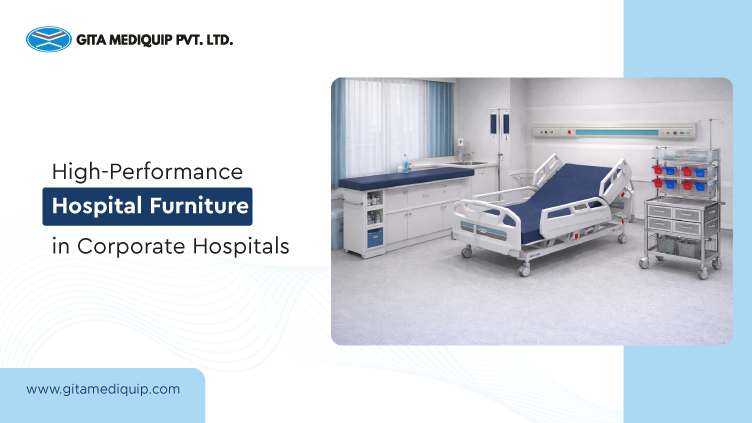
In the current corporate healthcare environment, the hospital furniture for corporate hospitals has evolved far beyond basic utility. The furniture in the hospital doesn’t just fill rooms as a basic necessity; it directly influences patients’ comfort, staff productivity, and clinical efficiency, and it affects the hospital’s overall branding. Along with advanced medical practices and patient expectations, the corporate healthcare setting must also stay up to date with the latest furniture to deliver high-quality care and safety. So corporate hospitals invest in hospital furniture that’s not just functional but also operationally effective and aligned with both hospitality and medical standards.
Here are the key characteristics that define high-performance hospital furniture.
Ergonomic Design for Patients and Healthcare Staff
Furniture designed solely for utility is different from hospital furniture designed with proper ergonomics. Investing in ergonomically designed hospital furniture ensures patient safety and reduces staff physical strain. The semi-electric hospital bed in India for patients, the examination tables, and the waiting area seating are designed to support the human body comfortably for prolonged periods, which is a prerequisite. Ergonomically designed hospital furniture minimizes strain, allows smooth repositioning, and supports a posture that significantly contributes to patient recovery.
Infection Control and Hygiene
Hospital environments demand stringent infection prevention. With the constant traffic of patients battling various diseases, hospitals are prone to infection. The non-porous surfaces of furniture often feature antimicrobial coatings, such as specialized stainless steel or copper components, that reduce the rates of hospital-acquired infections. So the furniture supports hygiene protocols and contributes to patient safety and patient accreditation standards.
Mobility and Flexibility
In modern healthcare, spaces are often needed to accommodate different departments, which may be on different hospital floors. Hence, high-performing hospital furniture is designed to support quick patient transfers without causing discomfort to patients or caregivers. The easy configuration of hospital beds enables rapid patient movement in emergency departments and in ICU beds for corporate hospitals without compromising stability, workflow, or patient care.
Brand Image and Aesthetic Appeal
Ticking the boxes of infection control, ergonomic and modular designs, and hospital furniture highly influence the corporate hospital’s brand perception and patient experience. The furniture in hospitals serves as the visual identity and reflects the strong emphasis hospitals place on providing state-of-the-art furnishings for the utmost patient safety and comfort. Therefore, the furniture with modern designs, high-quality materials and finishes, and well-coordinated colors has a massive impact on the hospital environment and aesthetics. The furniture’s highly functional, hospital-inspired aesthetics reinforce the hospital’s reputation for quality care.
Technological Integrations
The corporate hospital furniture has significantly enhanced its functionality, becoming more technology-enabled and patient-centric. Modern hospital beds don’t just offer ergonomic features; they also feature built-in smart monitoring capabilities, electrical ports, and more. Moreover, high-performance environments use electric beds with ICU-specific features, such as CPR release functions, integrated weight scales, and reverse Trendelenburg positions, to facilitate seamless coordination between healthcare staff and patients.
Durability and Lifecycle Value
Corporate hospitals operate round the clock, which, in turn, puts greater strain on equipment and infrastructure. The high-performance hospital furniture is tested for longevity and load-bearing capacity. The furniture should be robust enough to withstand continuous cleaning cycles, frequent movement, and heavy use without losing structural integrity. Healthcare facilities prioritize investing in furniture that reduces replacement frequency and long-term maintenance costs.
Regulatory Compliance and Safety
Patient safety is the utmost priority of the hospitals. Safety is a key factor in high-performing hospital furniture, so healthcare facilities are investing in furniture that meets stringent regulatory standards for accessibility, load-bearing capacity, and fire resistance. Hospital furniture designed with anti-slip surfaces, side rails, secure mechanics, alarms, and rounded edges is ideal for patients to reduce injury risks. Moreover, compliance with healthcare regulations protects patients and also safeguards hospitals from legal and operational risks.
Conclusion
Healthcare procurement is heavily focused on sustainability, so hospitals are increasingly choosing furniture made from eco-friendly, recycled materials; repairable and modular furniture; and products that reduce waste through long-lasting design. As corporate healthcare evolves towards smarter, safer, and more patient-centric, hospital furniture will also continue to support advanced clinical efficiency, innovation, operational excellence, and future-ready care.